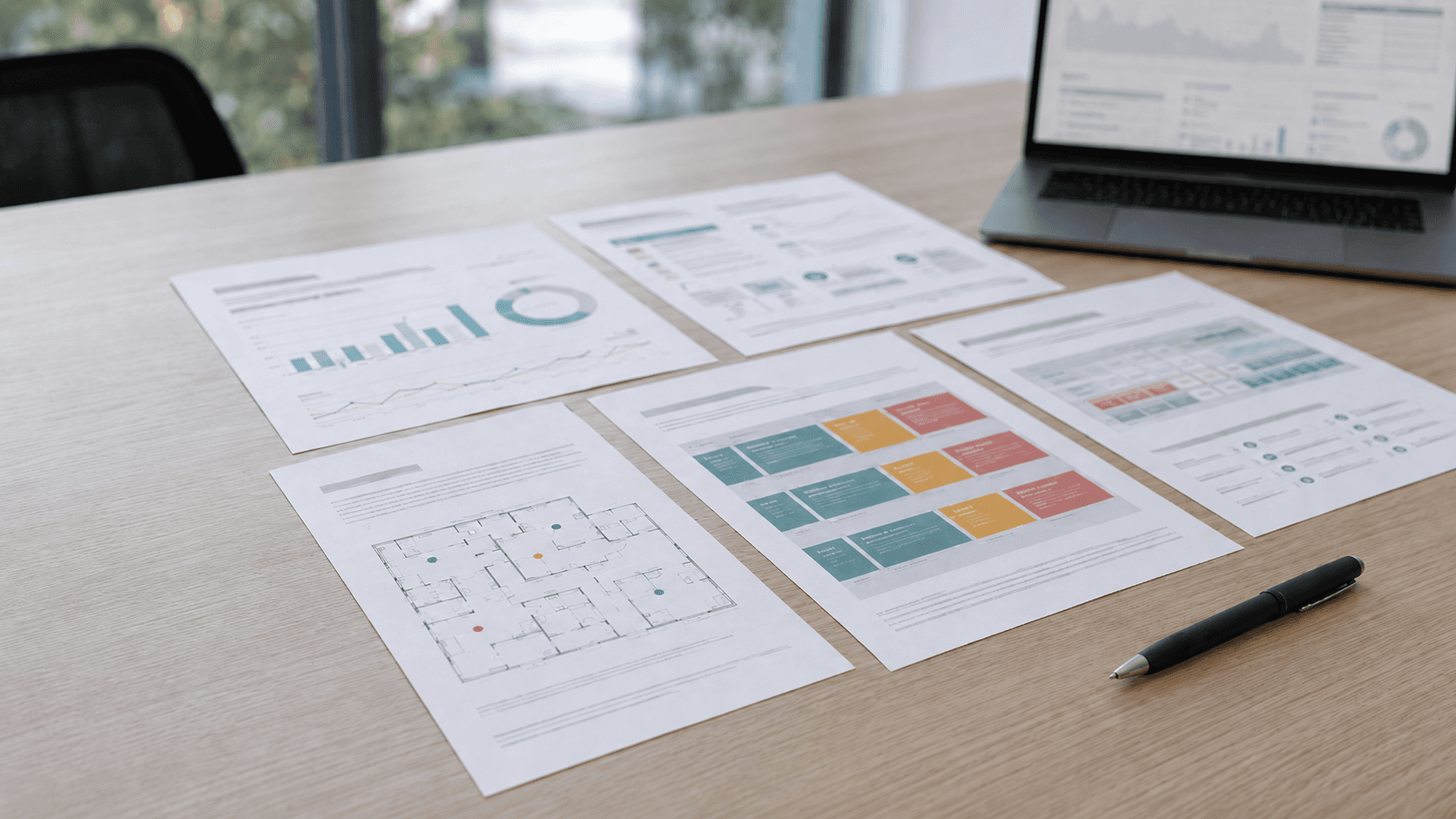
Reports that explain what the data shows and what remains uncertain.
Aeroshi reports turn monitored room data into one practical output: findings, repeated patterns, next steps and clear boundaries.
Built for project and funding decisions.
The structure stays consistent across baseline, intervention-support and decision studies.
Findings, recommendations and limits
Executive summary, site overview, findings and practical next steps.
Housing, schools, funders and partners
Designed for teams that need a clear report object, not another dashboard.
A stakeholder object
A report, briefing appendix or proposal pack item, not just a dashboard export.
Monthly reports and study reports are not the same product.
The output depends on whether you are using Aeroshi continuously or commissioning a defined piece of work.
Monthly site report
Included with Plus and Expert
An automated recurring summary of the monitored site's recent conditions, patterns and next actions.
Final study report
Defined in a study proposal
A project-specific output answering the original decision, monitoring scope, findings, uncertainties and agreed recommendations.
Stakeholder or formal pack
Separately scoped when required
A tailored output for a board, funder, customer, legal or other named decision audience. It is not implied by a monthly subscription.
The report is backed by shareable outputs.
Dashboards and summaries show the patterns behind the findings.
The deliverable shows findings and boundaries together.
Treated spaces moved differently from comparison rooms during the marked monitoring window.
Ventilation context is shown separately from filtration evidence.
- Does not certify health outcomes.
- Does not prove disease-transmission reduction.
- Does not replace formal assessment.
The downloadable report and pilot documents above are illustrative examples and proposal materials, not completed deployment case studies. Procurement information and site-specific RAMS are available during scoping or onboarding.
A scoped study and an ongoing app plan do different jobs.
The study answers a defined project decision. Free, Plus and Expert determine what remains available in the app after the access included with that work.
- 01
Scope the study
The proposal defines the decision, rooms, monitoring period, deployment support, analysis, final output and the dashboard access included during the work.
- 02
Deliver the agreed evidence
Aeroshi monitors the agreed scope and delivers the project output described in the proposal. A final study report or stakeholder pack is a scoped service deliverable, not a standard app subscription feature.
- 03
Choose what continues
After the included access period, Free keeps the basic live view, Plus keeps longer analysis and automated monthly site reports, and Expert adds human guidance to Plus.
Clear boundaries are part of the product.
Reports support decisions without overstating the data.
- Aeroshi supports decision-making evidence. It does not diagnose mould, certify homes as safe or unsafe, prove health outcomes, prove legal responsibility, or replace professional building, damp, legal, clinical or regulatory assessment.
Ask about report-led monitoring
The proposal defines the decision, monitoring scope, final output and app access included during the work.