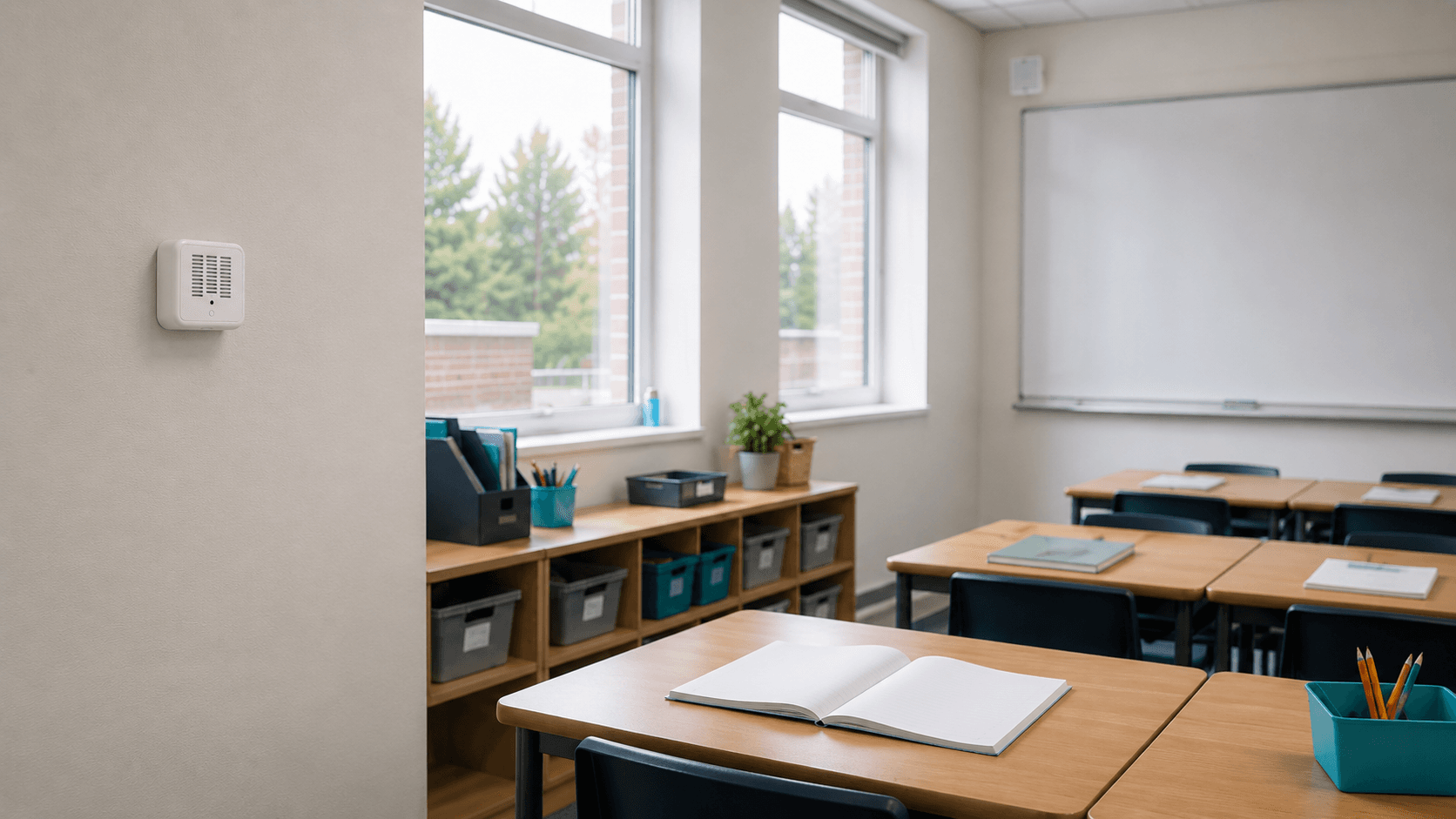
Evidence for which school rooms need action first.
Aeroshi helps school leaders, MAT estates teams and councils monitor selected classrooms, prioritise rooms and package the evidence into a shareable output.
A scoped study, not a sensor-only purchase.
The plan is built around the rooms, timing and decision audience.
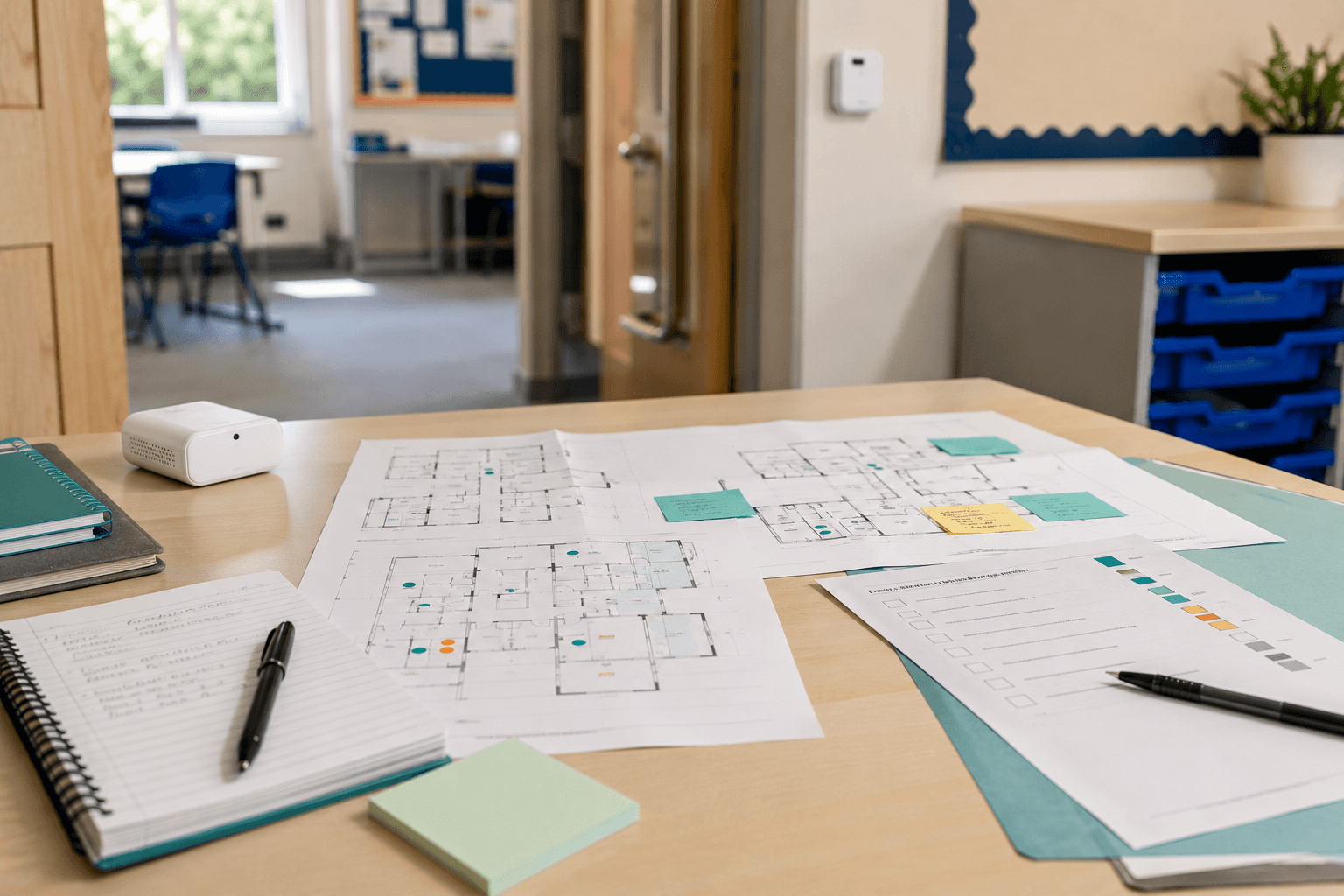
What the school can take into the decision.
A short evidence report for leadership, estates, council, funder or governor use.
- Priority rooms and context spaces
- CO2 ventilation context kept separate from filtration evidence
- Findings, limitations, and recommended next steps
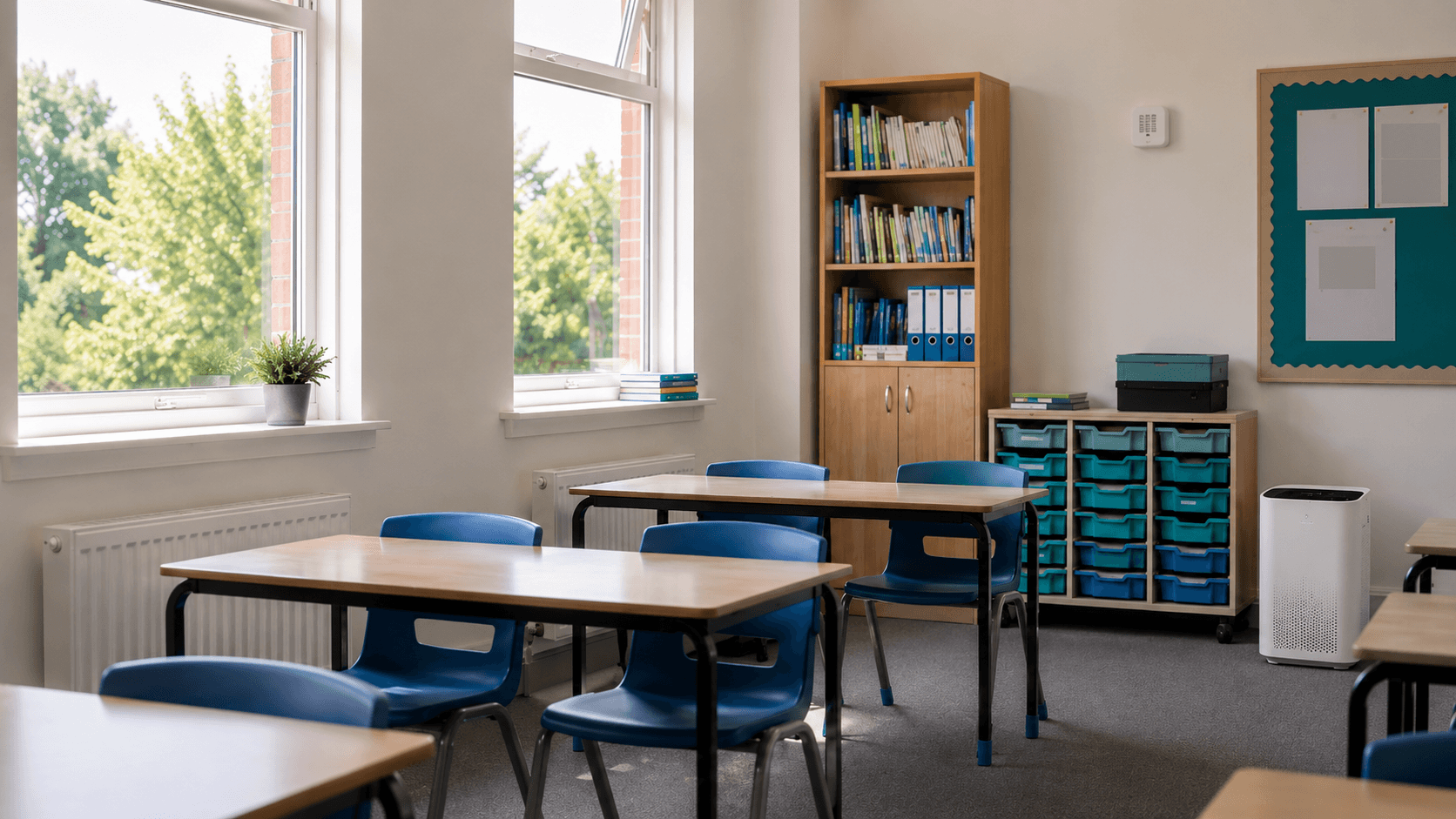
Reference Partner studies from around GBP 8,100.
GBP 8,100 is the starting price for early school-sector deployments. Funded, multi-stakeholder or formal stakeholder-reporting studies are scoped separately. Aeroshi is not currently VAT registered.
Typical model includes
- Up to 30 sensors across selected classrooms and shared spaces
- 12 months covering baseline, intervention, and post-change patterns
- Dashboard access and final evidence report
- Setup and placement guidance for selected rooms
Scoped separately where needed
- Formal reporting or stakeholder packs
- Intervention evaluation or multi-site support
- Repeated site visits
- Attendance or exam-performance analysis outside the evidence study
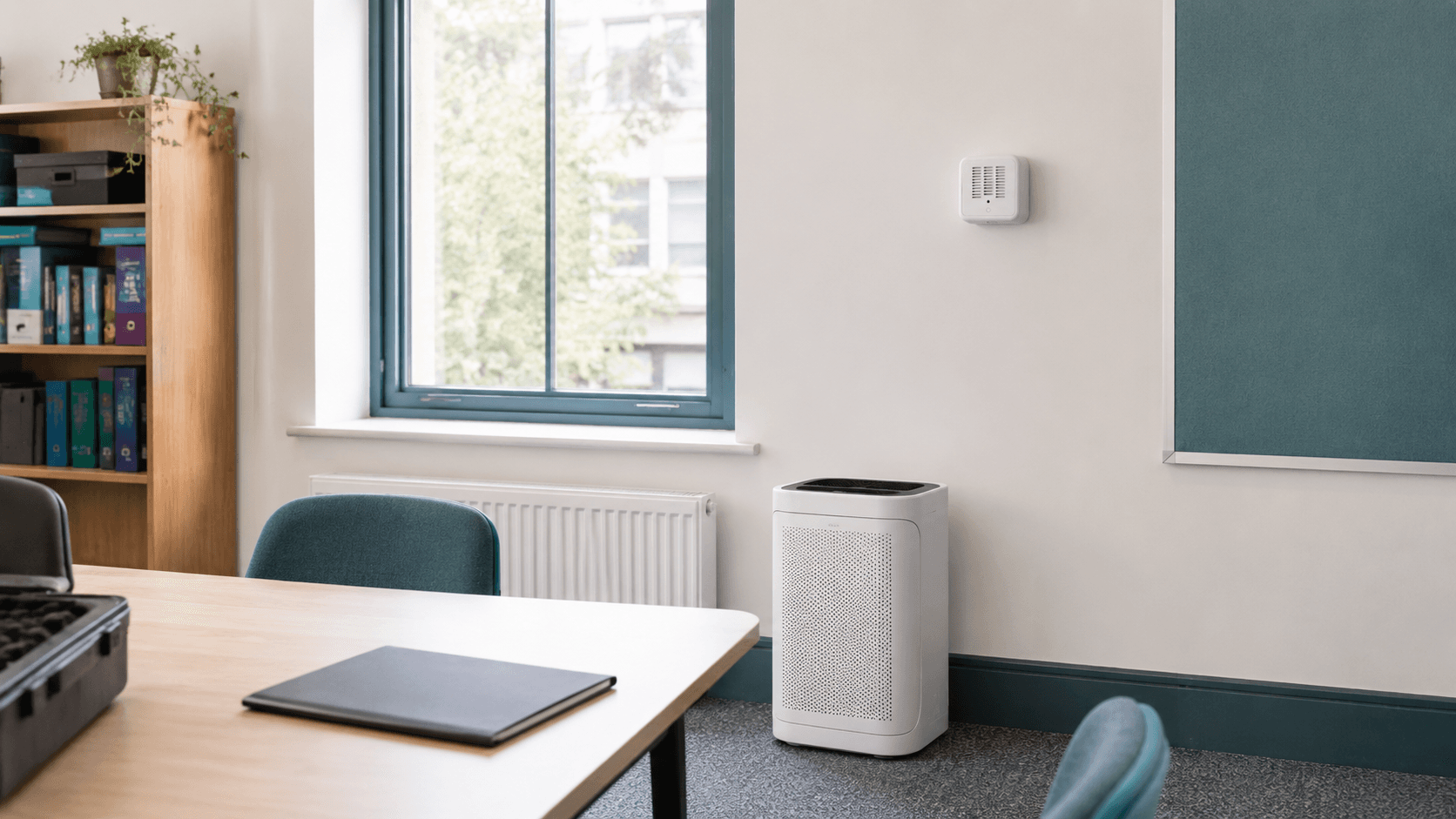
Four phases, one evidence trail.
Baseline, change marker, continued monitoring and report.
- 1
Baseline monitoring
Monitor selected classrooms and shared spaces.
- 2
Intervention period
Mark relevant ventilation, filtration or operational changes.
- 3
Continued monitoring
Keep watching the rooms over time.
- 4
Evidence reporting
Summarise findings, limits and next steps.
Procurement note, sample RAMS, insurance certificates once arranged, data/privacy checks, and a site-specific deployment plan are available during scoping or onboarding.
Short answers before scoping.
Is this a sensor-only purchase?+
No. The device is the monitoring layer. The deliverable is the evidence trail: baseline, comparison, outputs and reporting.
Does Aeroshi need pupil data?+
No. Aeroshi studies use room-level environmental data and do not require pupil names, staff names, cameras, microphones, audio or video.
Can this support a funding proposal?+
Yes. Aeroshi studies can support project proposals, funded pilots and stakeholder reporting where room-level evidence is needed around a change.
Does Aeroshi certify health outcomes?+
No. Aeroshi reports support decisions and reporting. They do not certify health outcomes, prove disease-transmission reduction or replace formal specialist assessment.
How does a study start?+
Aeroshi confirms the site, rooms, timing, project owner, intervention context and reporting audience, then proposes a scoped monitoring study.
Aeroshi monitoring is designed to support decision-making alongside Department for Education guidance on ventilation and air quality in education and childcare settings, including regular monitoring of ventilation and air quality. Reports also treat CO2 as ventilation context rather than proof of overall safety, consistent with HSE guidance that CO2 measurements are a broad guide to ventilation. Aeroshi provides decision-support evidence and does not certify legal or regulatory compliance.
Discuss a school monitoring study
The proposal defines the monitoring scope, project output and app access included during the work.