For professionals investigating damp, ventilation and indoor air quality
Indoor-air monitoring, from room to report.
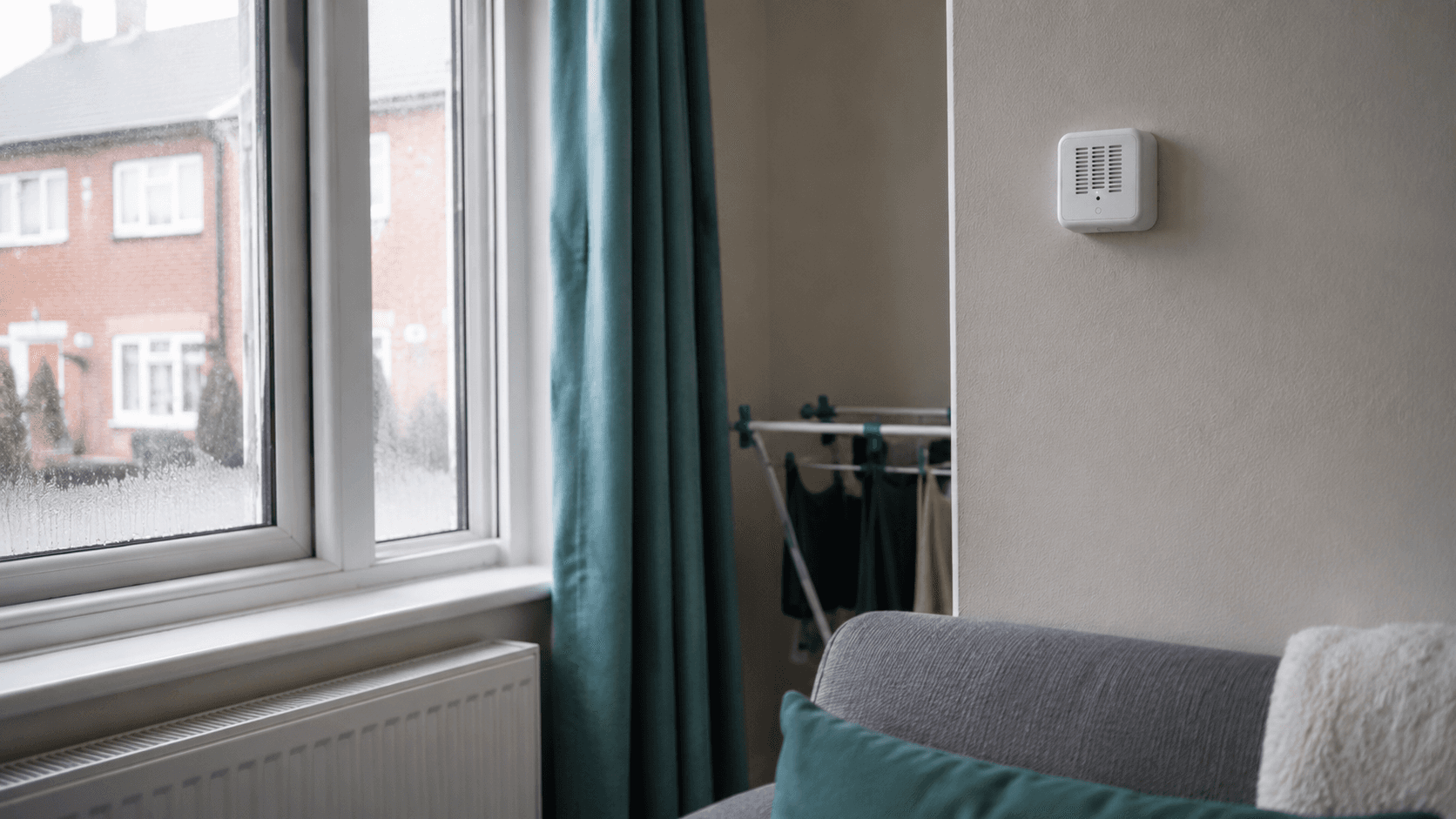
Aeroshi tracks humidity, temperature, CO₂ and particles between visits, compares patterns across rooms and automatically prepares clear evidence reports.
Live property view
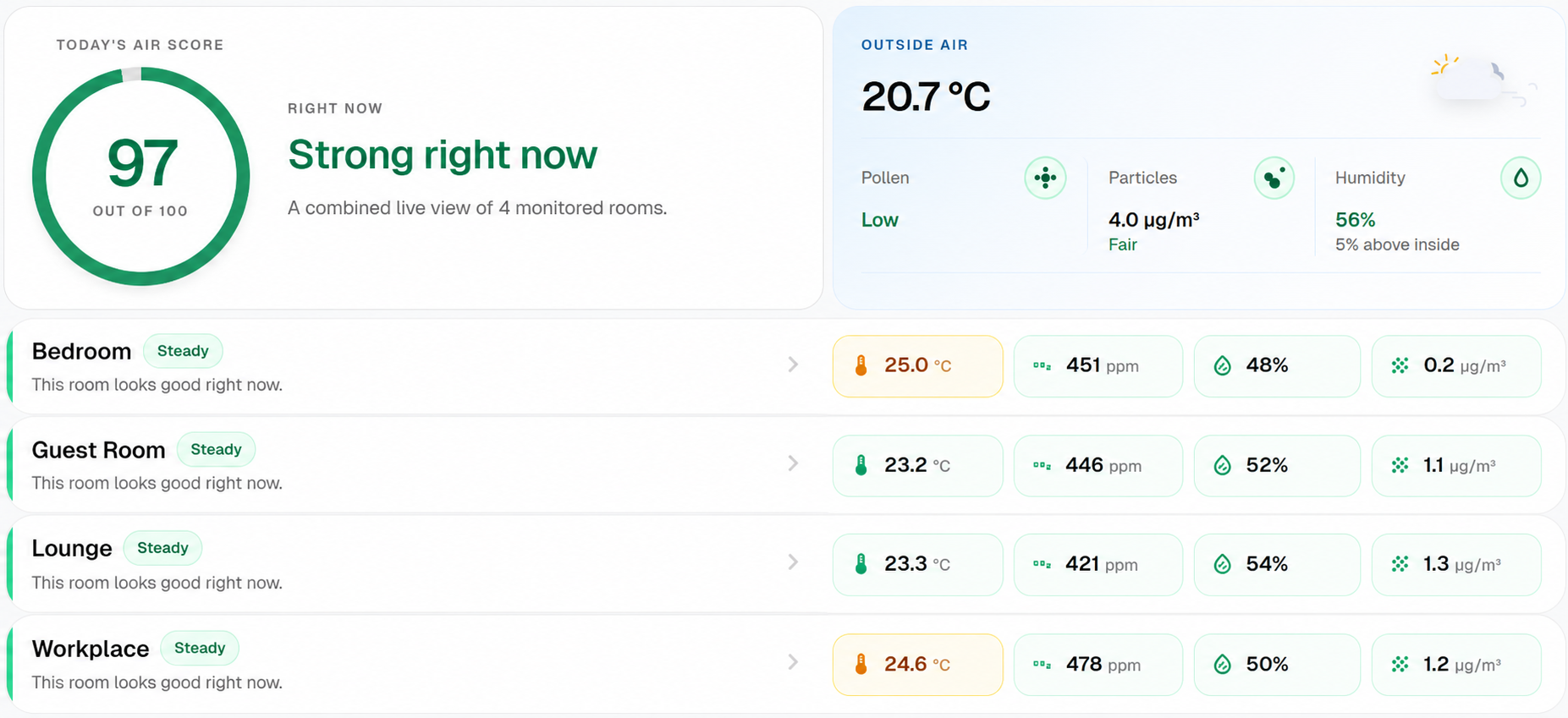
See what is happening across the property.
Aeroshi keeps the current conditions, outside context and room comparisons in one clear view while the monitoring continues between visits.
The client report
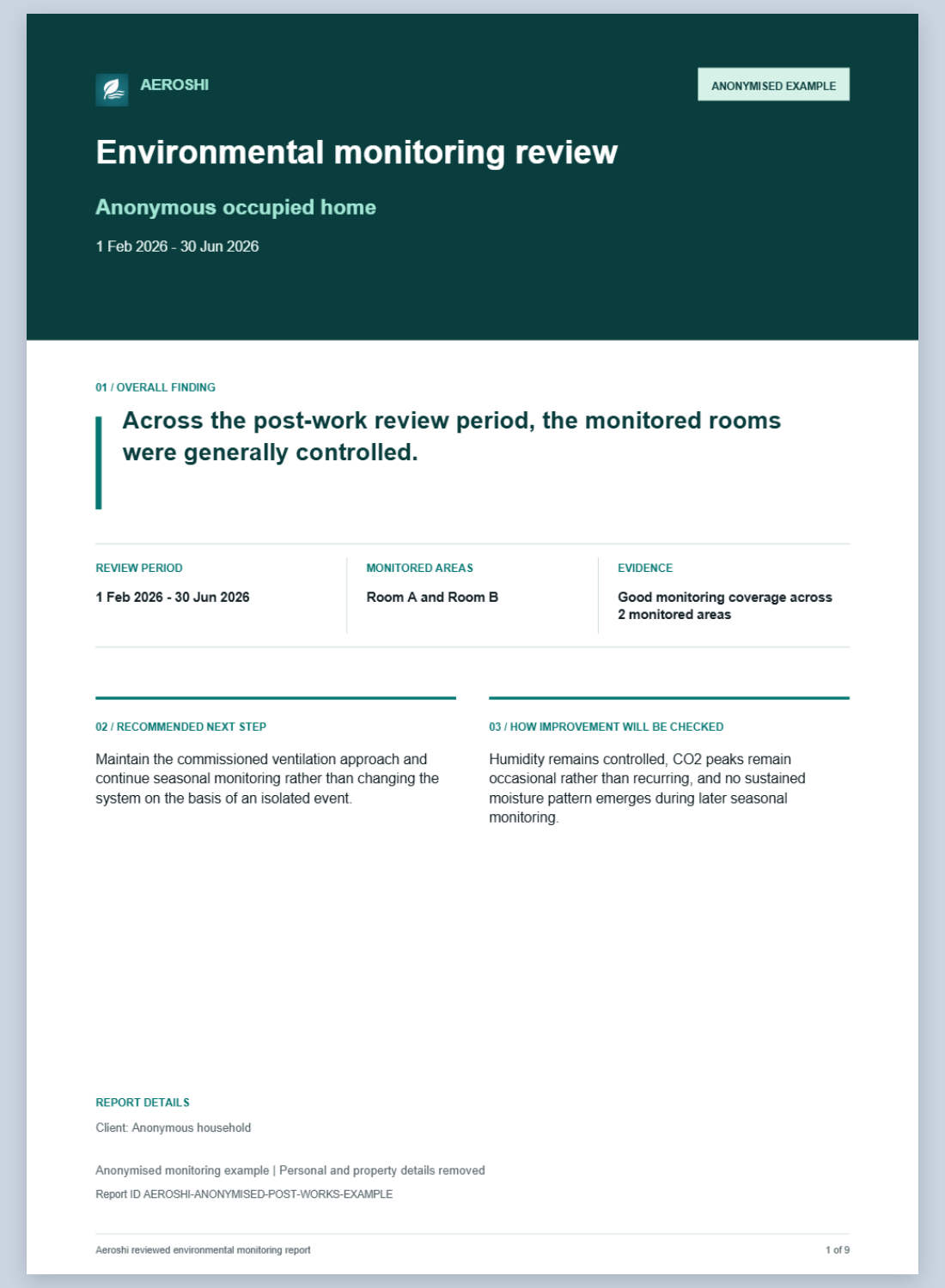
Turn the monitored period into one clear record.
Aeroshi prepares the measured evidence in a consistent report. The practitioner adds the inspection context, recommendation and limitations before sharing it with the client.
Example result
78%
Less time at high humidity.
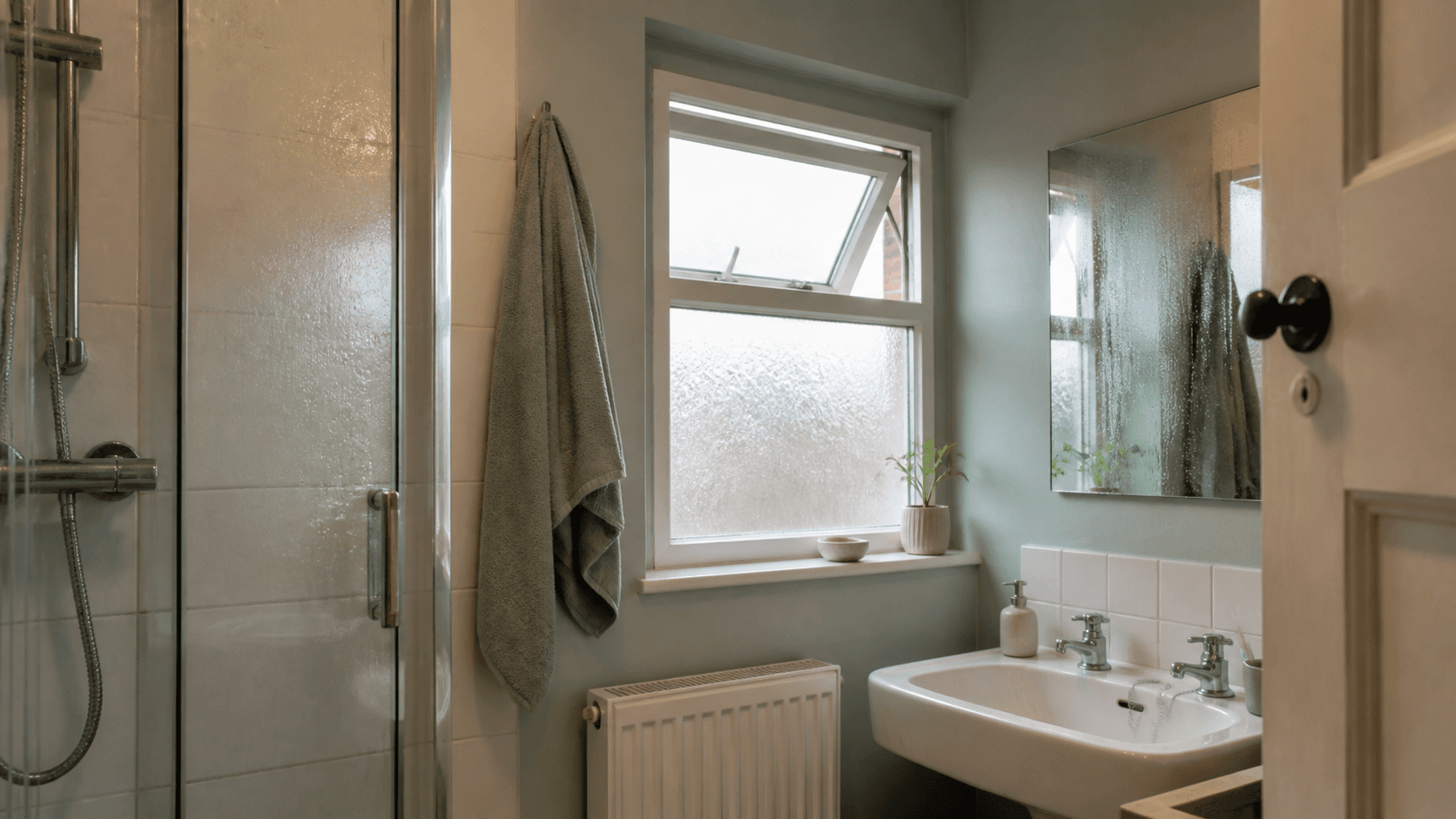
After the resident changed the shower routine, the living room spent 78% less time above the humidity threshold. Aeroshi compared the first and final complete weeks across two rooms.
Read the full resultA practical starting point
When one visit is not enough.
Start with the room of concern and a useful comparison room. Expand the monitoring only when the case needs wider context.
Discuss the property