Room comparison guide
Why compare two rooms instead of using one air-quality monitor?
One monitor can show that a reading changed. A second room helps answer the more useful question: was the change local to this room, shared across the home, or part of a broader day that affected both?
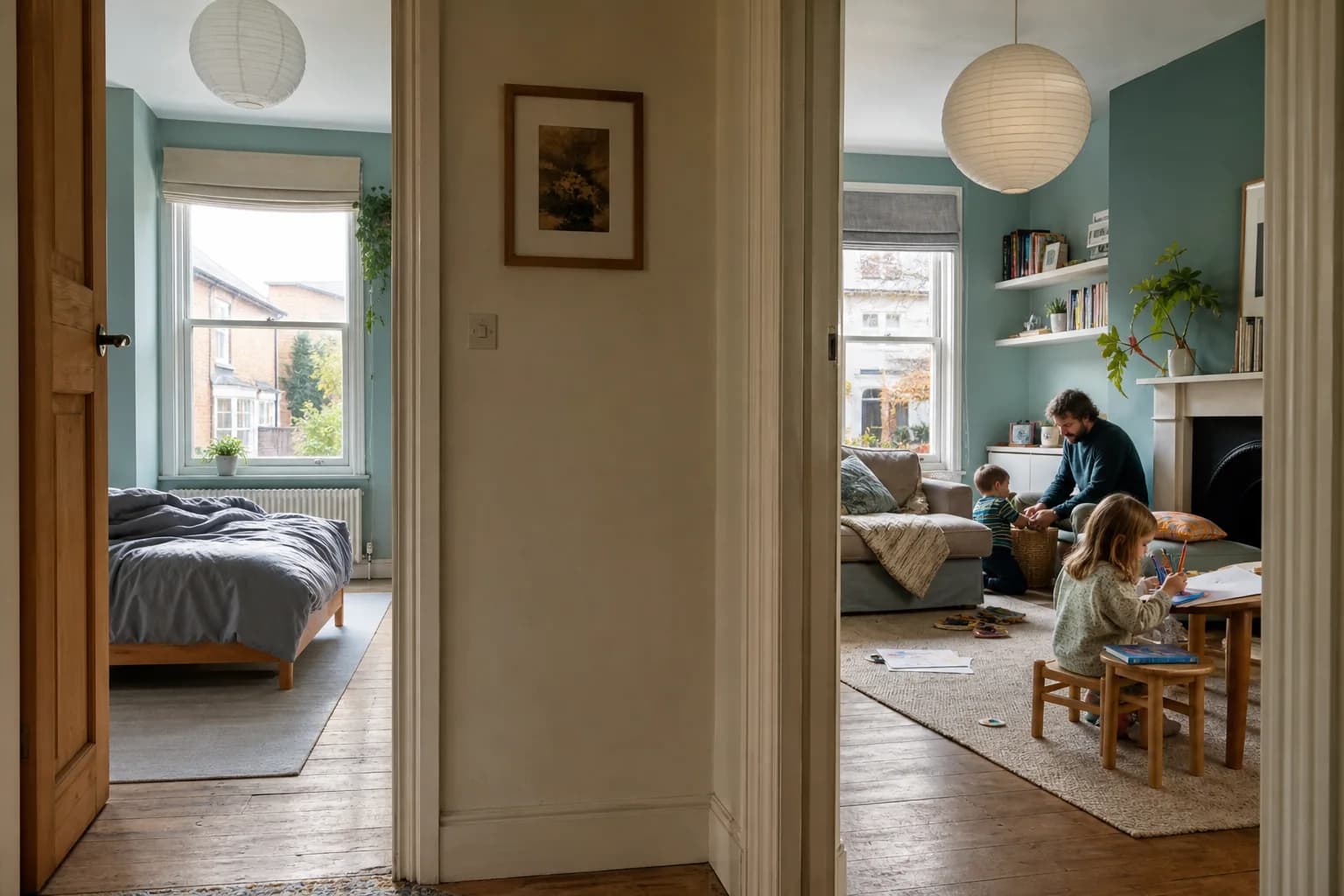
The second room is context, not a perfect control
Both rooms experience much of the same weather and household day, but their occupants, size, doors, windows, extraction and activities can differ. That makes the second monitor a practical reference: useful for testing explanations, but not a laboratory control and not proof of cause.
This matters because CO2 and other readings vary within a space. HSE advises representative monitor positions, repeated measurements rather than snapshots and multiple sampling locations in larger spaces. Its guidance is written for workplaces, but the placement principle applies to interpreting room comparisons. Read the HSE monitor guidance.
What two rooms can help you distinguish
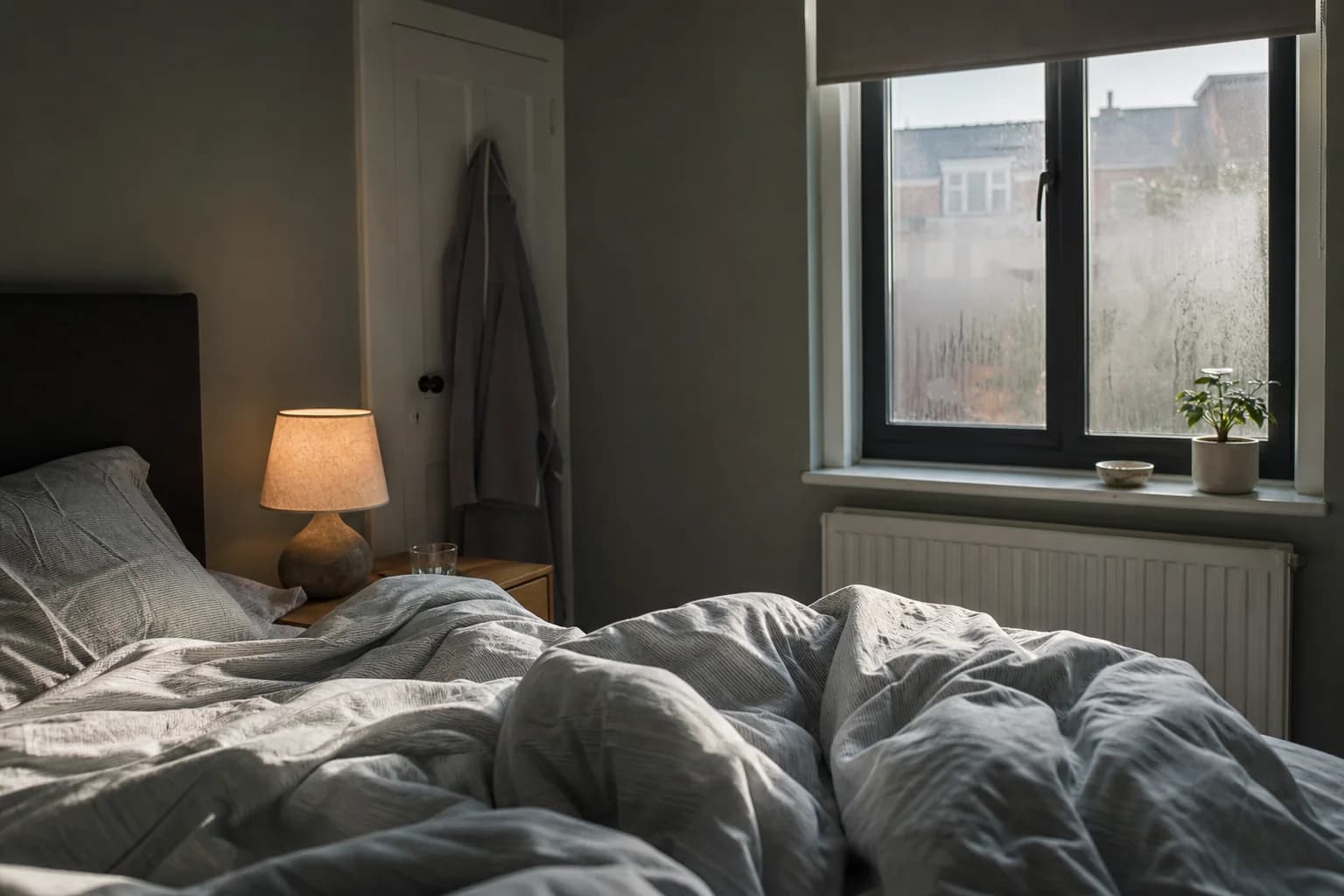
Bedroom CO2 rises; living room stays lower
That supports a room-specific occupied-night pattern rather than assuming the entire home behaved the same way.
Particles rise in both rooms together
A shared event or outdoor influence becomes more plausible than a source confined to one monitored room.
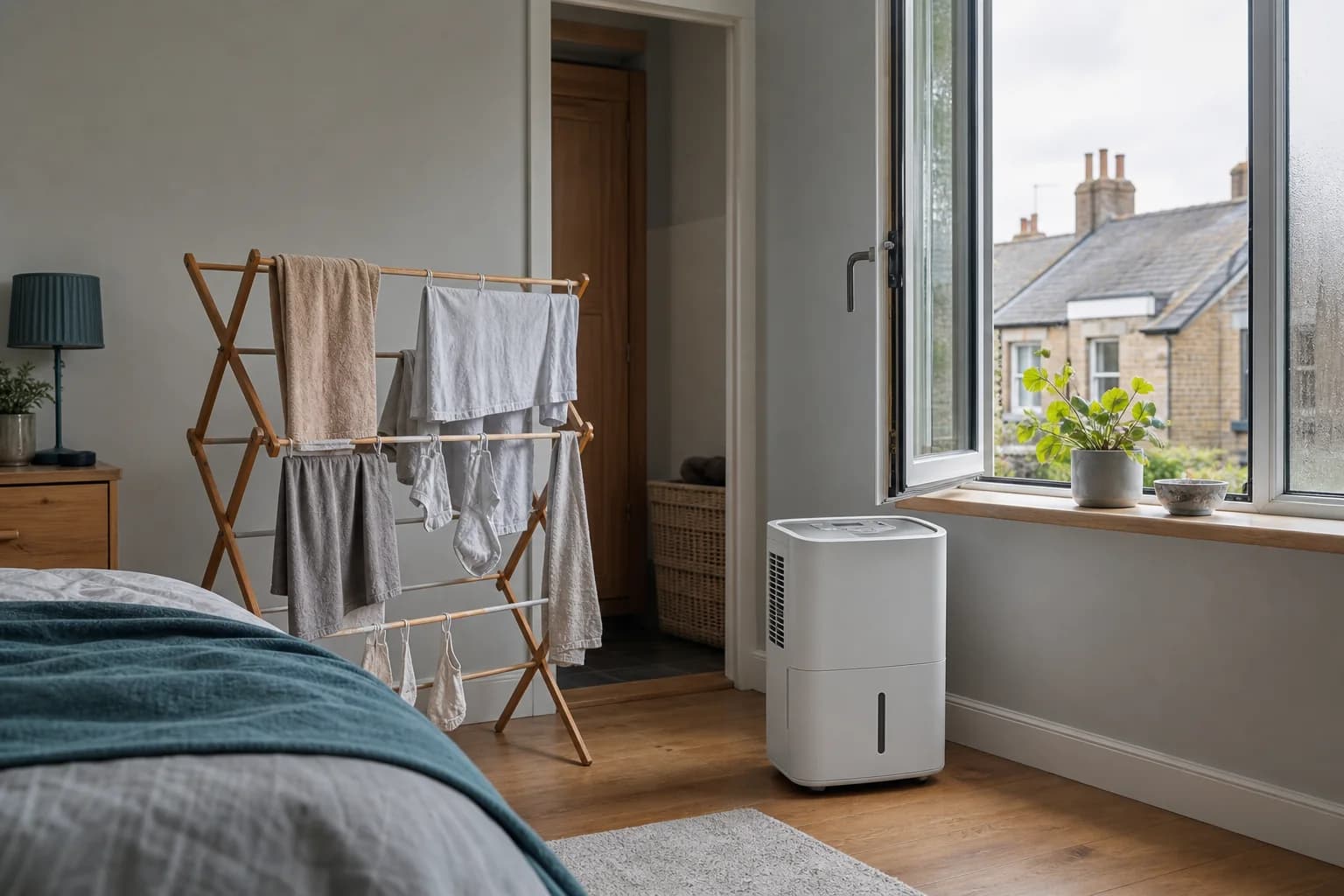
Humidity clears slowly in one room
Room use, extraction, temperature or a local building condition deserves closer attention.
Both rooms change on the same unusual day
Weather or a household-wide routine may explain the difference better than the intervention you were trying to test.
Keep the comparison honest
- 1
Choose rooms around a real decision
For example, a bedroom that feels stuffy and a living room used as the household reference.
- 2
Use representative, stable placement
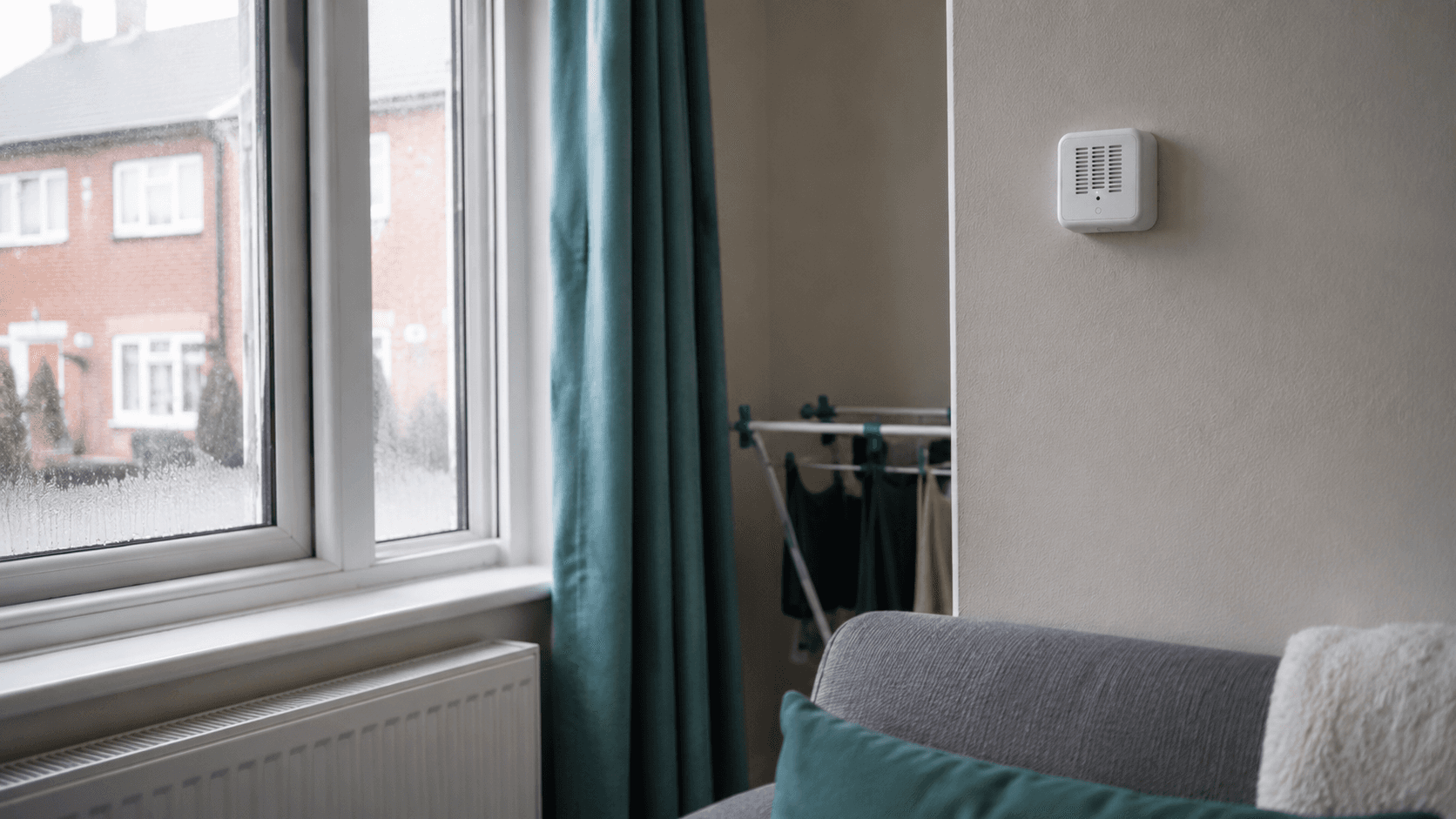
Avoid placing a monitor directly beside a person, window, door, vent, purifier outlet or moisture source unless the setup guidance says otherwise.
- 3
Record what changed
Occupancy, open doors or windows, cooking, showers, cleaning, equipment use and outside conditions all affect interpretation.
- 4
Repeat before concluding
Look for recurrence across comparable periods and test one practical change at a time.
Observed Aeroshi result
The bedroom pattern repeated while the comparison room behaved differently.
In the Aeroshi founder's home, two-room monitoring helped identify recurring overnight bedroom CO2. After a ventilation routine changed, later weather-matched bedroom nights spent 72% less time above the study's reference level. This was an observed association with recorded limitations, not proof of cause.
Read the result and methodologyTwo rooms still leave blind spots
The comparison does not assess every room, hidden moisture, fabric or wall conditions, ventilation-system performance or personal exposure everywhere in the home. Escalate persistent damp, visible mould, suspected combustion risk, a building defect or a health concern instead of relying on monitor data alone.
Quick answers
Questions people commonly ask
Are two monitors enough to assess a whole home?
No. Two rooms provide a useful comparison, not a whole-home survey. Unmonitored rooms, hidden building conditions and short-lived local events can behave differently.
Should the two monitors be placed side by side first?
A short co-location check can reveal an obvious device or setup difference, but normal monitoring needs representative positions in the two chosen rooms. Follow Aeroshi's setup guidance and keep placements stable during comparisons.
Can I move one monitor around instead of using two?
You can learn from sequential measurements, but the rooms will then be measured at different times and under different weather, occupancy and household activity. Simultaneous monitoring makes the comparison cleaner.