Humidity and condensation guide
Dehumidifier or ventilation: how can you tell what is helping?
A dehumidifier and ventilation can both change humidity, but they do different jobs. The useful test is whether the same room clears moisture faster under comparable conditions - without assuming that a lower number has solved the underlying cause.
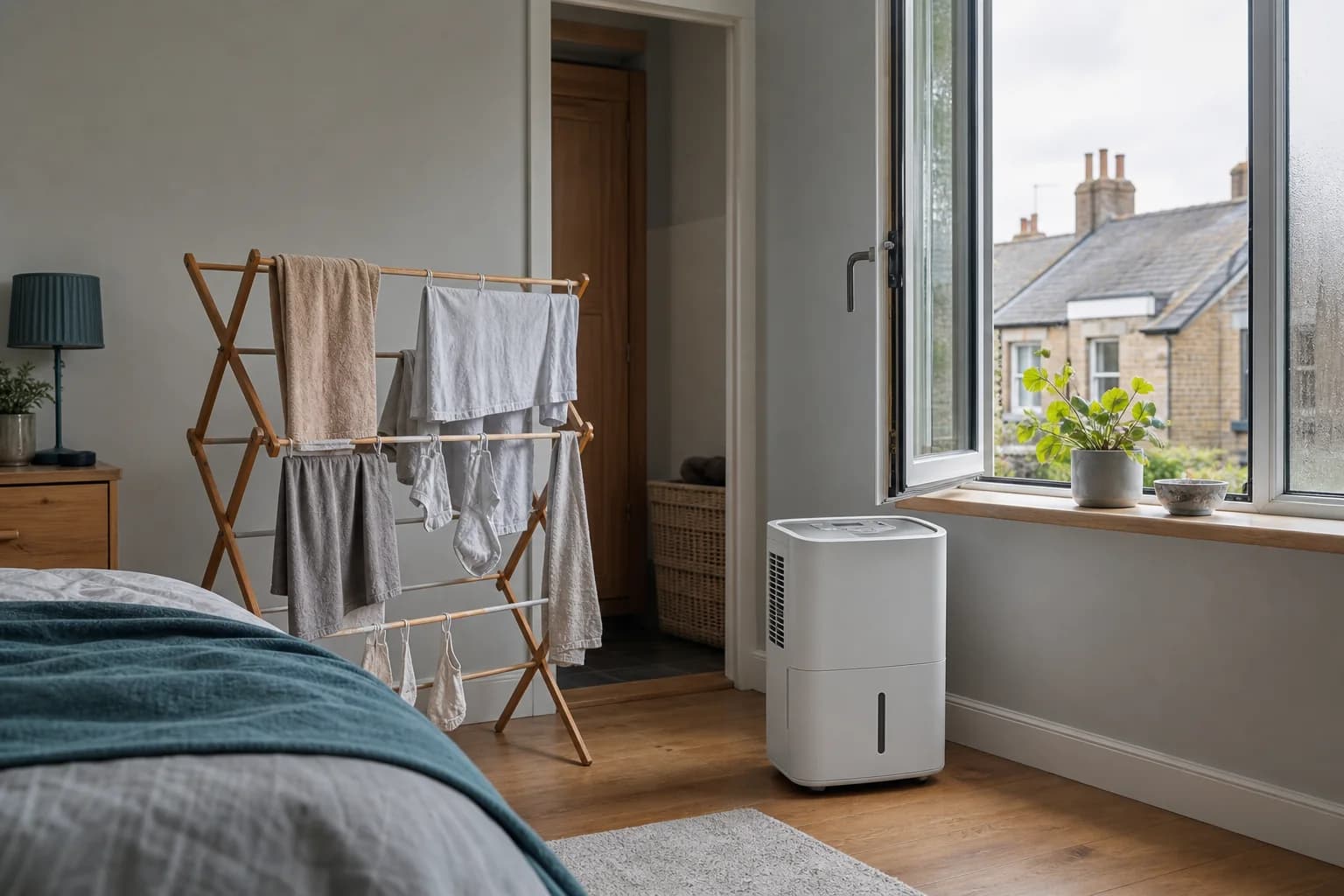
They solve different parts of the problem
A dehumidifier removes water from indoor air. Ventilation exchanges indoor air and moisture with outside air; local extraction is intended to remove moisture near activities such as showering and cooking. Neither result automatically identifies why moisture entered the room or why a surface became cold enough for condensation.
UK government guidance says everyday activity can add moisture that becomes condensation when it cannot escape, and that the right response depends on the dwelling. It can include fixing building deficiencies, improving ventilation, addressing heating or energy efficiency and reasonable changes to moisture-producing routines. Read the official damp and mould guidance.
A fair way to test what helps
- 1
Establish the repeating pattern
Monitor several ordinary days before changing anything. Note showers, cooking, laundry, occupancy and visible condensation.
- 2
Change one thing at a time
Test the dehumidifier, an existing extractor routine or another suitable ventilation change separately, rather than changing everything together.
- 3
Compare like with like
Look at similar activities, room use and weather. Keep each monitor in a stable, representative position.
- 4
Check the whole pattern
Compare the humidity rise and clearing time, temperature and occupied-room CO2 context - not just the lowest humidity value.
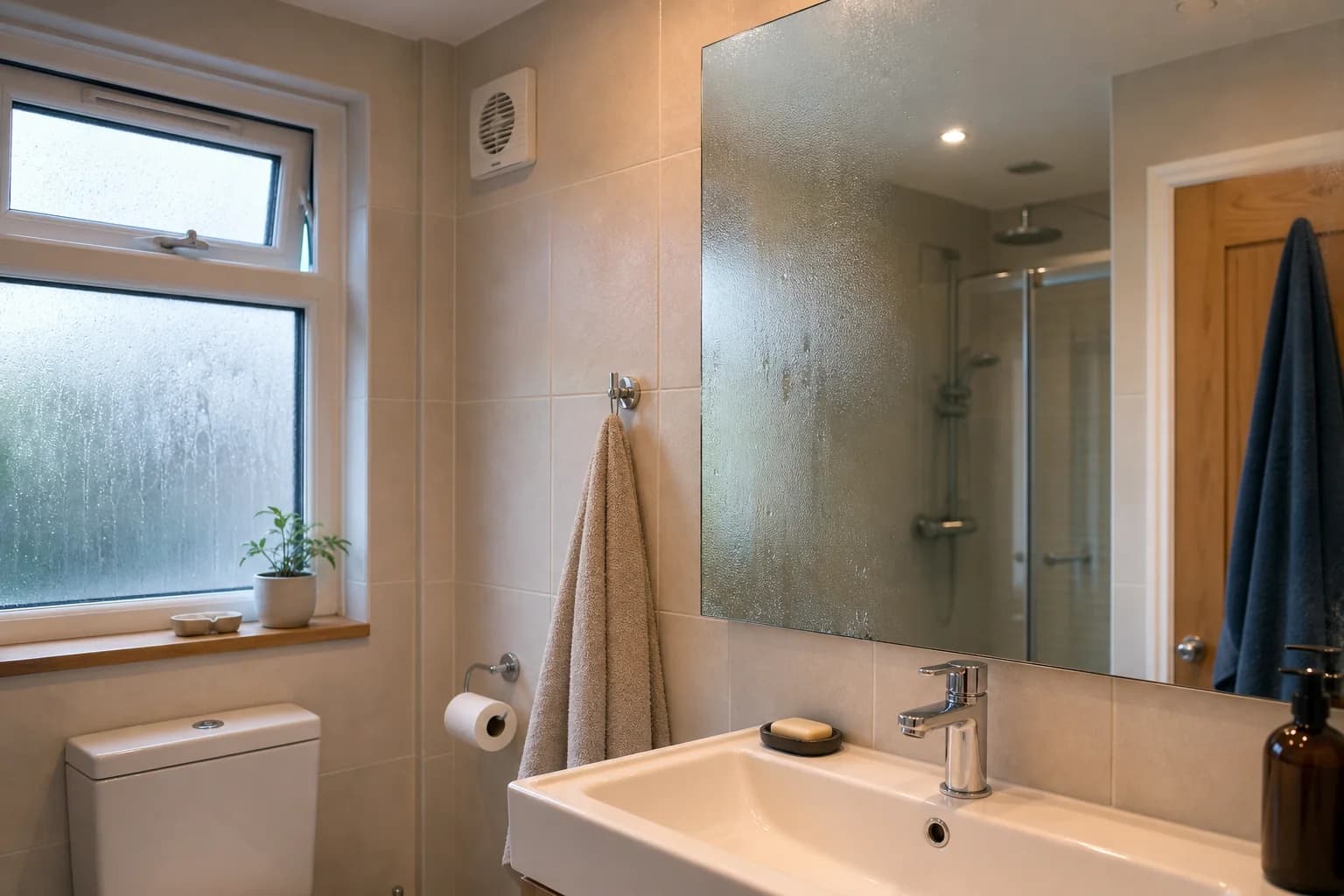
How to read the result
Humidity clears faster; CO2 pattern is unchanged
That is consistent with the dehumidifier removing moisture. It does not show that fresh-air exchange improved.
Humidity and occupied-room CO2 clear faster
That can be consistent with better air exchange after a ventilation change, but occupancy, weather and placement still need to be considered.
Only one room keeps recovering slowly
The comparison points towards a room-level difference worth investigating, such as use, extraction, temperature or a building condition.
The pattern persists or visible damp returns
Do not keep treating the monitor as the investigation. Document it and involve the landlord or a suitably qualified building professional.
Do not let a lower reading hide a building problem
Government guidance says surface mould removal and occupant actions are not substitutes for finding and addressing an underlying issue. Persistent damp, mould, leaks, defective ventilation or a health concern need prompt, appropriate investigation. Aeroshi is not a mould survey or formal damp assessment.
The decision to make
Measure the recovery, not just the reading.
A useful before-and-after comparison asks how high humidity rose, how long it stayed elevated and how the same room behaved after one practical change. CO2 should remain a separate ventilation clue.
Understand each monitor readingQuick answers
Questions people commonly ask
Does a dehumidifier ventilate a room?
No. A dehumidifier removes water from the room air, but it does not replace stale indoor air with outside air. Humidity and CO2 ventilation context should therefore be checked separately.
Can one humidity reading tell me whether I need a dehumidifier?
Not reliably. Relative humidity changes with temperature and short activities such as showering, cooking and drying laundry. The rise, how long it takes to clear and whether it repeatedly returns are more useful than one reading.
Can monitoring diagnose the cause of damp or mould?
No. Monitoring can show recurring moisture and temperature patterns, but it is not a damp survey and cannot rule out leaks, penetrating damp, insulation defects or other building problems.