A bedroom spent 72% less time above 1,000 ppm after one routine changed.
- Before
- 120 min
- After
- 34 min
- Difference
- 72% less
Why room comparison mattered
The bedroom behaved differently from the rest of the home.
Across 159 comparable nights, bedroom peaks were higher than the lounge on 89% of nights. That made the next decision specific: change the bedroom routine, then check whether the pattern followed.
What happened next
120 to 34
minutes above 1,000 ppm
This comparison uses 16 later nights matched to February nights within 1°C of outdoor temperature. It reduces the chance that warmer weather alone explains the difference.
Bedroom CO2 across the study
Median nightly peak, 22:00-07:00 on adequately covered nights
February Bedroom
1,096 ppm
July Bedroom
595 ppm
How we checked this
Fixed monitoring
Four rooms, using 15-minute readings across 159 adequately covered comparable nights.
Same-home comparison
The lounge provided a second room under the same household and broad weather conditions.
How to interpret it
The precise change date, window position and occupancy were not recorded, so the result is an observed association rather than proof of cause.
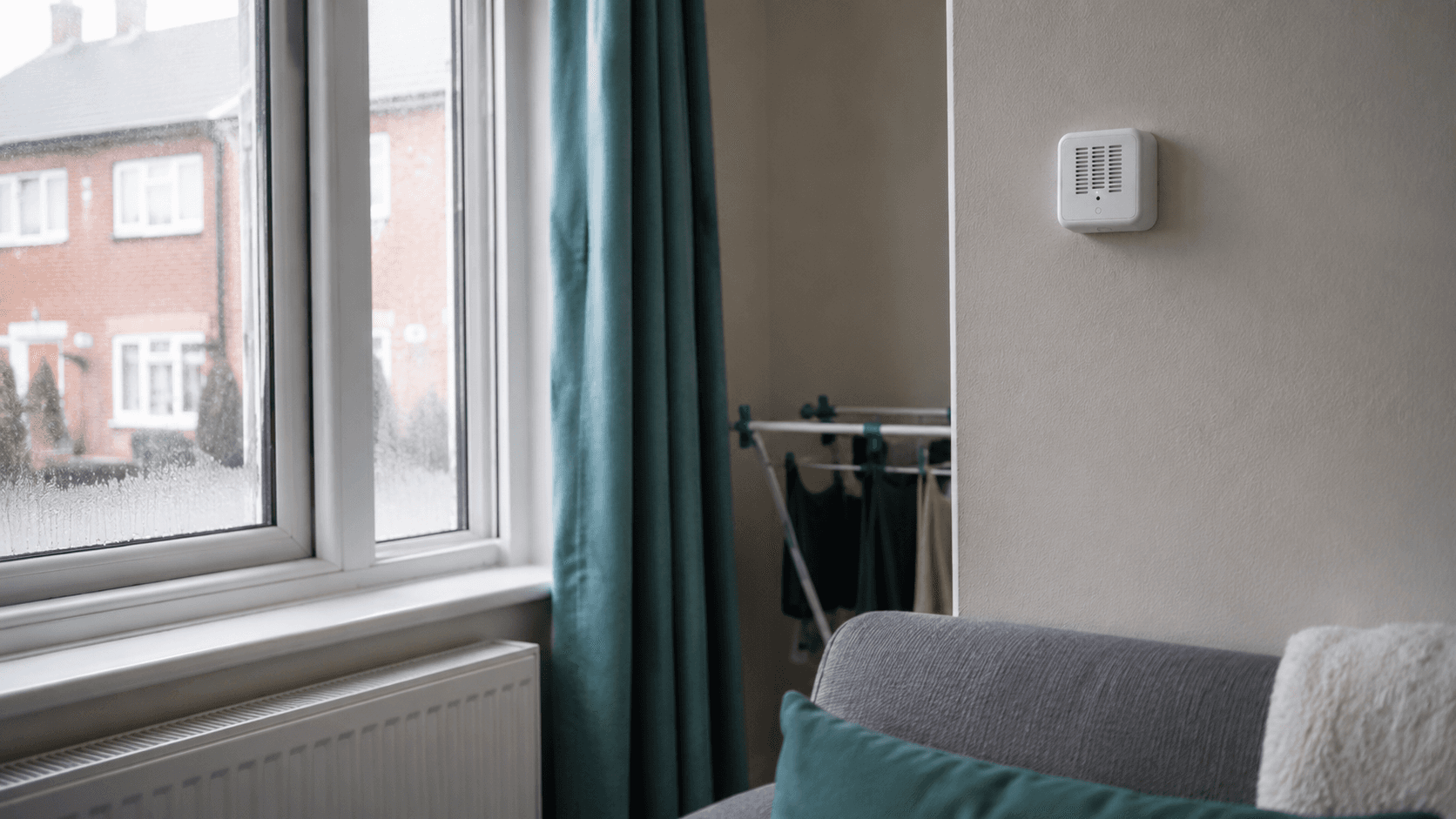
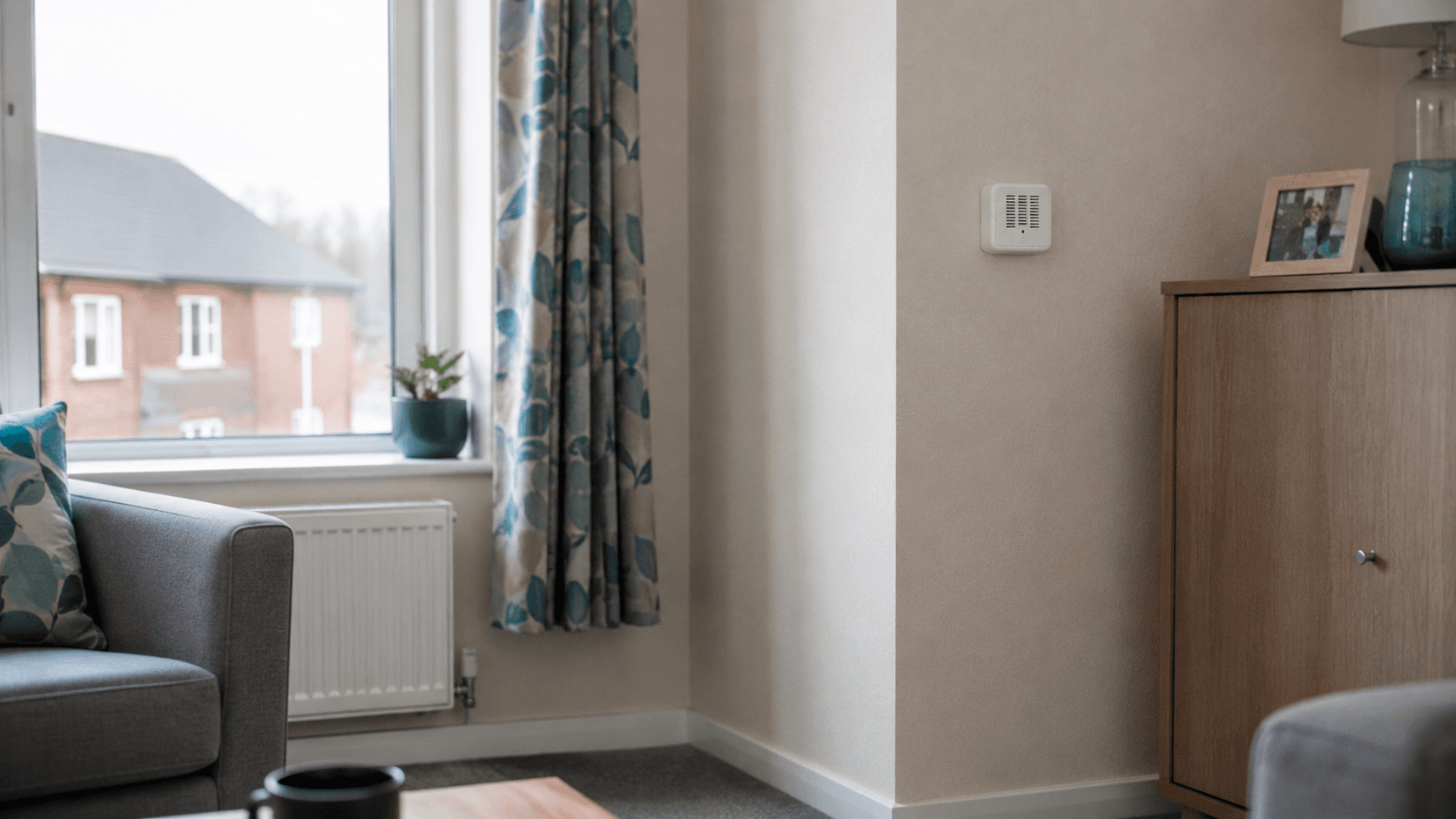
Room photography is representative; the monitoring result is observed in the founder's home.
Could monitoring show whether the room responded?
Tell us the recurring room pattern or change that needs checking.