2-sensor starter setup for room-to-room diagnosis, guided onboarding, and ongoing analysis.
Aeroshi is sold on the website as a whole-home starter setup, not as a standalone monitor. The current offer is built for homes where one monitor, one fix, or repeated guesswork still has not made it clear which room or routine matters most.
The setup uses two indoor sensors to compare room-level patterns, then pairs that data with the Aeroshi platform so customers can see current conditions, whole-home trends, room priorities, and a monthly review.
| Hardware | 2 indoor air-quality sensors for room-to-room comparison |
| Included service period | 3 months of Aeroshi Plus |
| Setup support | Onboarding and placement guidance |
| Review support | One follow-up review |
| Best fit | Homes where one monitor is not enough to show which room or routine to focus on first |
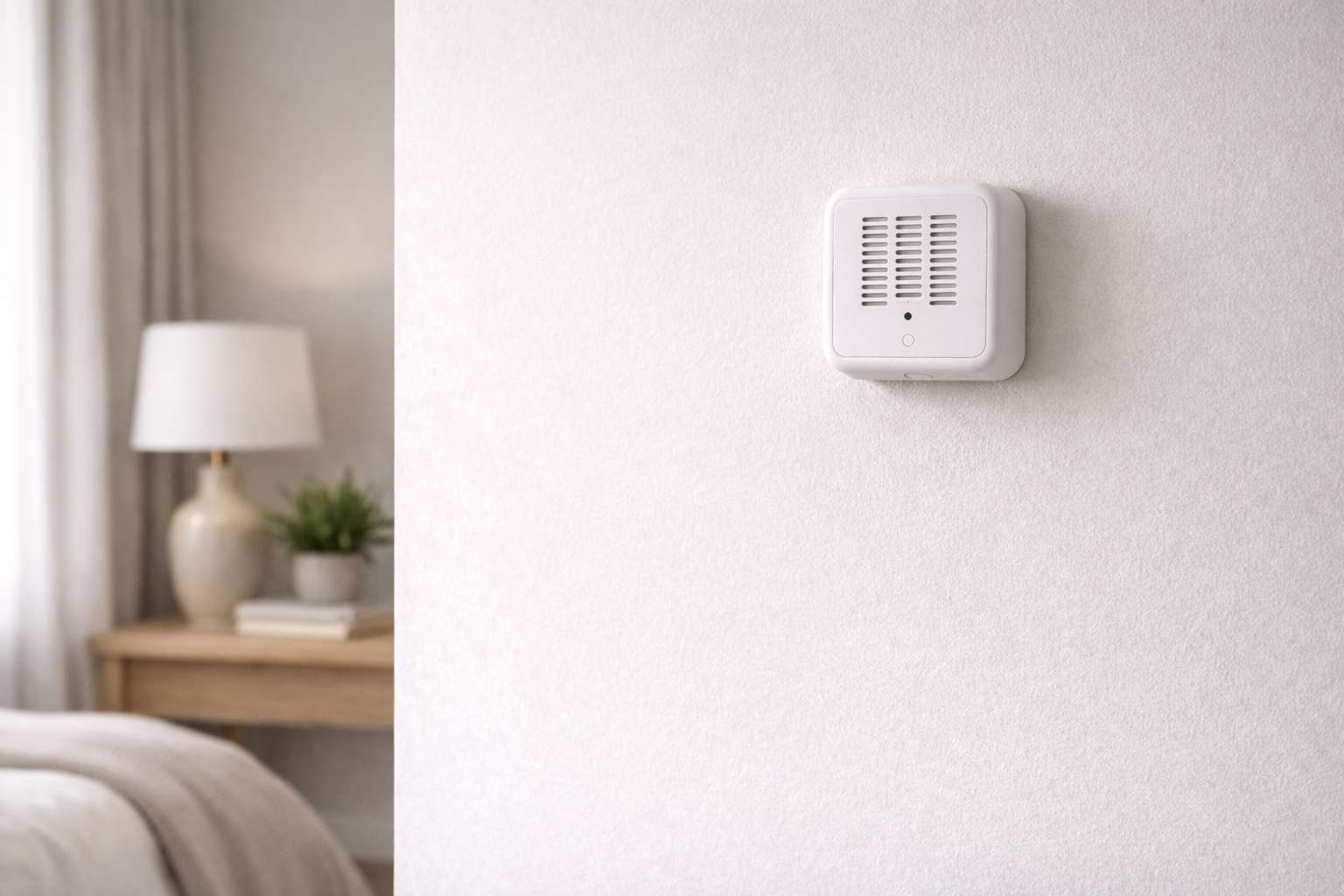
The live offer is framed as a starter setup for difficult whole-home cases, with two sensors placed in selected rooms rather than a single isolated reading point.
View current home conditions and weekly home trends inside the live dashboard.
Building-risk views help identify likely moisture, ventilation, or heating drivers.
Health views expose room-level burden across CO₂, gases, particles, humidity, and temperature.
| Room comparison | Compare rooms directly instead of relying on one monitor in one location |
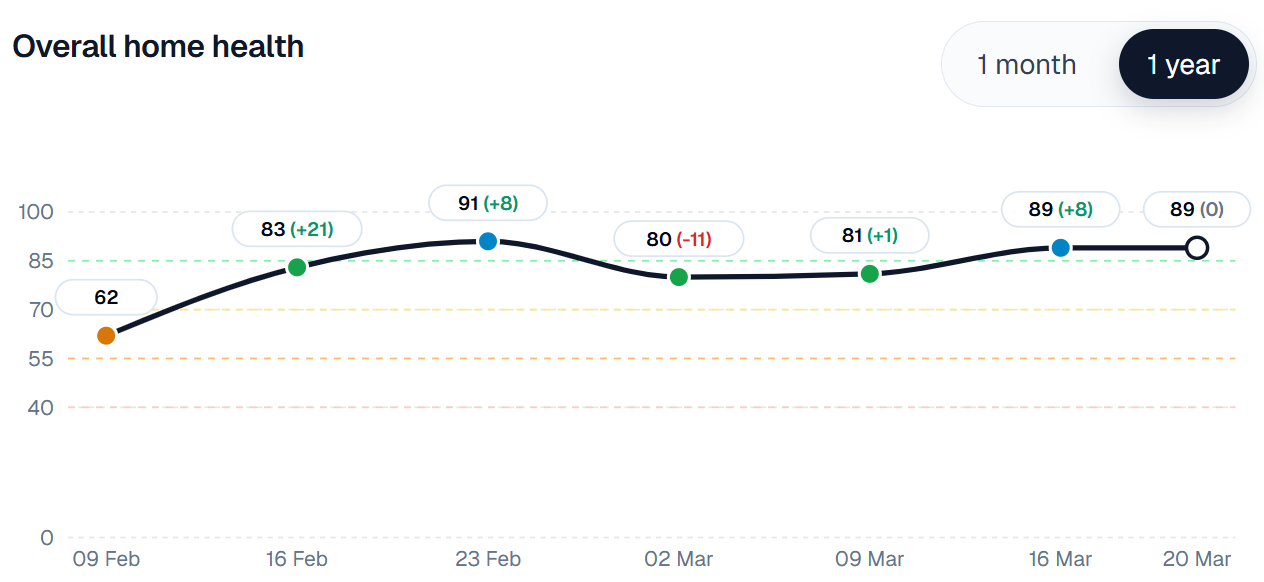
| Trend review | See whether the overall home trend is improving, stable, or worsening over time |
| Alerts | Live dashboard alerts and notification support on supported devices and browsers |
| Monthly export | PDF monthly building control and health review for the selected site and room scope |
The current product offer combines room-level sensing with guided interpretation and monthly reporting.
Whole-home trend view used to judge whether the home is improving over time rather than relying only on one-off readings.
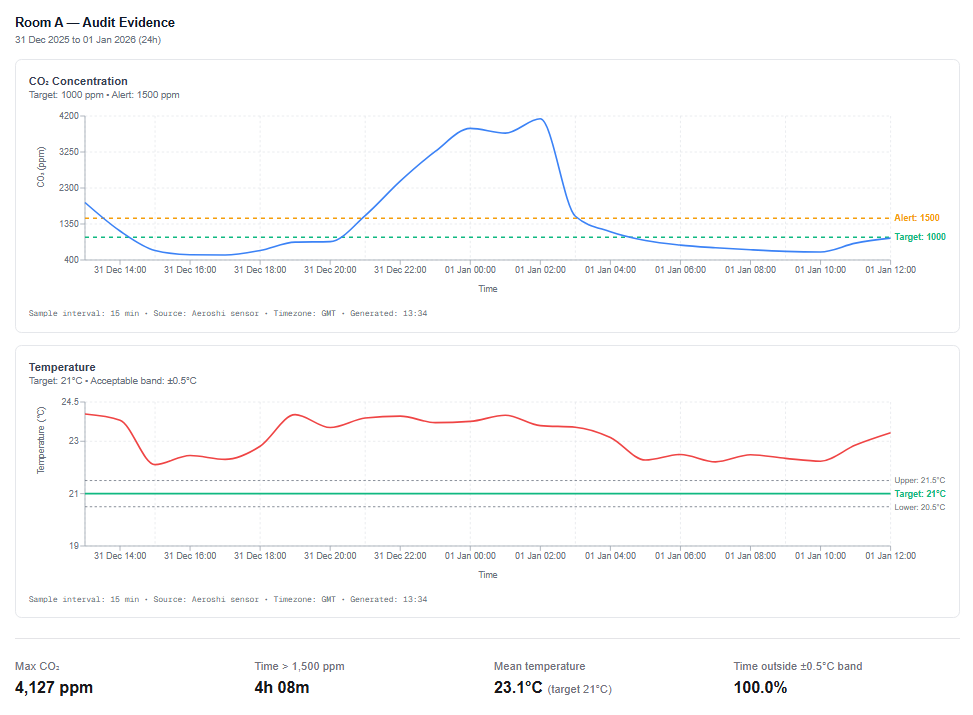
Room trend evidence used to compare rooms and understand whether a problem is localised, repeated, or starting to affect more of the home.
| Starter setup format | Two sensors deployed across selected rooms to establish comparison rather than single-point monitoring |
| Onboarding flow | Confirm setup, place the monitors, watch the first pattern form, then decide what to change next |
| Reports workflow | Choose a completed month and export the monthly building control and health review as a PDF |
| Post-included access | Customers can remain on basic access or move into Plus or Guided tiers after the included Plus period |
| Sensor core | Sensirion SEN66 |
| Measurement channels | CO₂, PM1, PM2.5, PM4, PM10, VOCs, NOx indicators, temperature, and relative humidity |
| Sample interval | 1 minute |
| Power | USB-C 5V, <3W typical, <5W peak (PSU included) |
| Connectivity | Wi-Fi 2.4 GHz (WPA2); MQTT over TLS to cloud (no inbound ports) |
| Dimensions | 77 × 77 × 34 mm |
| Weight | <250g including mount |
| Mounting | Adhesive wall mount, vertical orientation |
| Operating conditions | 0-50°C, 10-90% RH non-condensing, indoor use only |
| Storage conditions | -20 to 60°C, 10-90% RH non-condensing |
Sensor accuracy and performance specifications for the current hardware appendix.
| CO₂ range | 0-40,000 ppm |
| CO₂ accuracy | ±(50 ppm + 5% of reading) at 400-5,000 ppm |
| PM range | 0-1,000 µg/m³ |
| PM accuracy | ±10 µg/m³ (0-100 µg/m³), ±10% of reading (100-1,000 µg/m³) |
| Temperature range | -10 to +60°C |
| Temperature accuracy | ±0.5°C at 15-35°C |
| Humidity range | 0-100% RH |
| Humidity accuracy | ±3% RH at 20-80% RH |
| VOCs / NOx indicator range | 1-500 (dimensionless) |
| Response time (τ63%) | <10s for VOCs / NOx step change |
Deployment and platform note: one sensor is used per room, with the current website offer starting from a 2-sensor setup. Sensors connect over Wi-Fi to the Aeroshi cloud platform, where data is presented through dashboard, building-risk, health, and reports views.